The Missing Before and After in a Single Image
Image context can change how a photograph reads. Learn to inspect its source, framing, and sequence before deciding what the image can responsibly support.
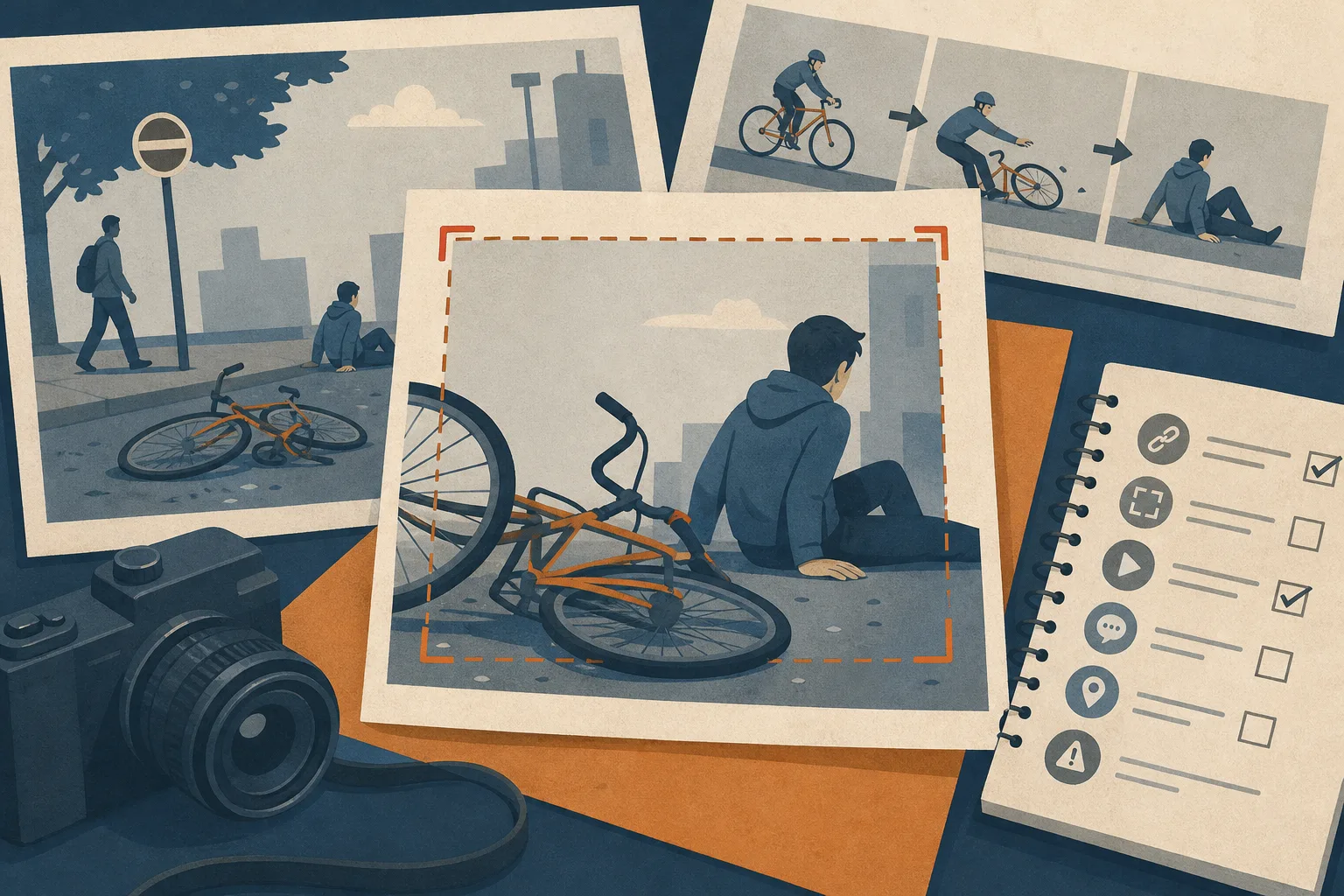
You see a photo of a person beside a toppled bicycle, captioned “A reckless rider caused a crash.” The image gives you a scene, but its borders also mark a limit: the action may have begun before the shutter clicked and continued after it stopped.
What does a single image leave outside the frame?
A photograph is a selection. The camera points one way, at one moment, and excludes whatever lies beyond the edges or outside the exposure. That selection shapes the story a viewer can imagine, even when no one has altered the image.
Look for the frame’s boundaries as part of the picture. A cropped bicycle wheel, a cut-off street sign, or a shadow entering from the edge may signal that relevant material is missing. These clues do not reveal what happened; they show where the image stops giving information.
Captions add a second layer. They can name a location or explain a scene, but they can also assign motives and causes that the photograph itself cannot establish. Keep the caption’s account attached to its source rather than treating it as part of the visual record.
How can you examine an image’s framing?
Start with the image as an arrangement, not as a complete event. Notice what is centered, what is cut off, where the camera seems to be, and whether the scene includes landmarks that can be checked against a fuller view.
Then ask what kind of image you have. A screenshot may omit the post around it. A tightly cropped photo may hide nearby people or objects. A still taken from a video may leave out the action that gives the moment its meaning.
- Source: If the image links to an original post or publication, compare its surrounding text with the circulating version; if no source can be identified, avoid repeating claims about the event.
- Crop: If a fuller frame is available and reveals relevant surroundings, describe those surroundings; if it is not, note that the edges leave part of the scene unseen.
- Sequence: If neighboring frames or a longer clip show how an action develops, revise your description to fit that sequence; if there is no sequence, do not fill in the missing motion.
- Caption: If the original caption attributes a cause or motive, present it as that source’s claim; if the image gives no support for it, leave the claim out.
- Date and place: If a reliable source identifies them and they matter to the scene, include them with attribution; if not, avoid assigning a time or location.
- Potential harm: If sharing could expose someone to accusation or other serious consequences, pause and seek independent context; if that context is unavailable, do not circulate the accusation as fact.
A repeated caption can make a claim feel familiar without adding anything to the frame.
What can image context change?
Context is material surrounding an image that helps explain its source, framing, or place in a sequence. An original post may clarify who supplied the image. A wider frame may reveal what a crop excludes. Nearby frames may show how a moment fits into a larger action.
Each kind of context has limits. A wider view can reveal a sign without proving who put it there. A video can show movement without explaining a person’s reason. Treat added material as a change to the available picture, not as automatic confirmation of every accompanying claim.
Say you encounter an invented, hypothetical photo of a shopkeeper holding a wet coat outside a doorway. Your starting inputs are one image, no link to its original post, and a caption claiming the coat was stolen. First, you describe only what is visible: a shopkeeper, a wet coat, and a doorway. Next, you locate the original post; in this invented situation, its longer text says rain blew the coat through the doorway and the shopkeeper picked it up. The observable result is a source account that contradicts the theft caption, so you decide not to repeat the accusation. If the original post were still unavailable, the cause would remain unresolved and the caption would not become established fact.
How should you decide what to share?
Use the image for the claims it can support, and make the boundary clear. “A bicycle is on the ground” describes visible content. “The rider caused a crash” adds responsibility and an event that the still image does not show.
Before posting or forwarding an image, ask:
- Does my wording describe the image, or does it infer an unseen action?
- Can I identify the source of the caption’s claims?
- Would a crop, earlier frame, or later frame change the description?
- Could an unsupported claim cause harm to someone shown?
If the source supports an account but the image does not, attribute the account. If neither supports a detail, leave it out.
What questions come up about image context?
Can a photograph show what happened before it was taken?
Not by itself. Objects or expressions may prompt questions about earlier events, but the still image does not record those events.
How can I check whether a caption fits the image?
Find the original post or publication and compare the caption with the visible scene, fuller framing, and any available sequence. If the source does not support a claim, do not repeat it as an established fact.
Can cropping change how a photograph reads?
Yes. A crop can remove surroundings that affect how a scene appears. Compare it with a fuller version if one is available, while remembering that the crop alone does not explain why it was made.
Should I share a photo when its context is unclear?
If sharing could spread a serious accusation or expose someone to harm, wait for reliable context or do not share it. For a low-stakes discussion, describe only what is visible and identify any unresolved point.
When does a photograph need more than context?
A photo may show an open door, but not who opened it or why. Reexamining the same frame cannot recover an event the camera did not capture.
When a decision affects health, safety, legal rights, work, or someone’s reputation, treat the image as limited information. Follow the relevant procedures and consult a qualified professional when specialized judgment is needed. An online photo alone is not a sound basis for diagnosing a condition, assigning legal responsibility, or assessing immediate danger.
Image context is useful when it clarifies what a frame includes, what it excludes, and which claims belong to a source rather than the picture. Before sharing, let the image context shape your wording: describe the scene, attribute the account, and leave unseen events open.