A Quiet Corner or a Window Seat? Choosing a Place to Read
Choose a quiet corner or window seat for reading by matching the book and your purpose to the kind of attention each place invites.
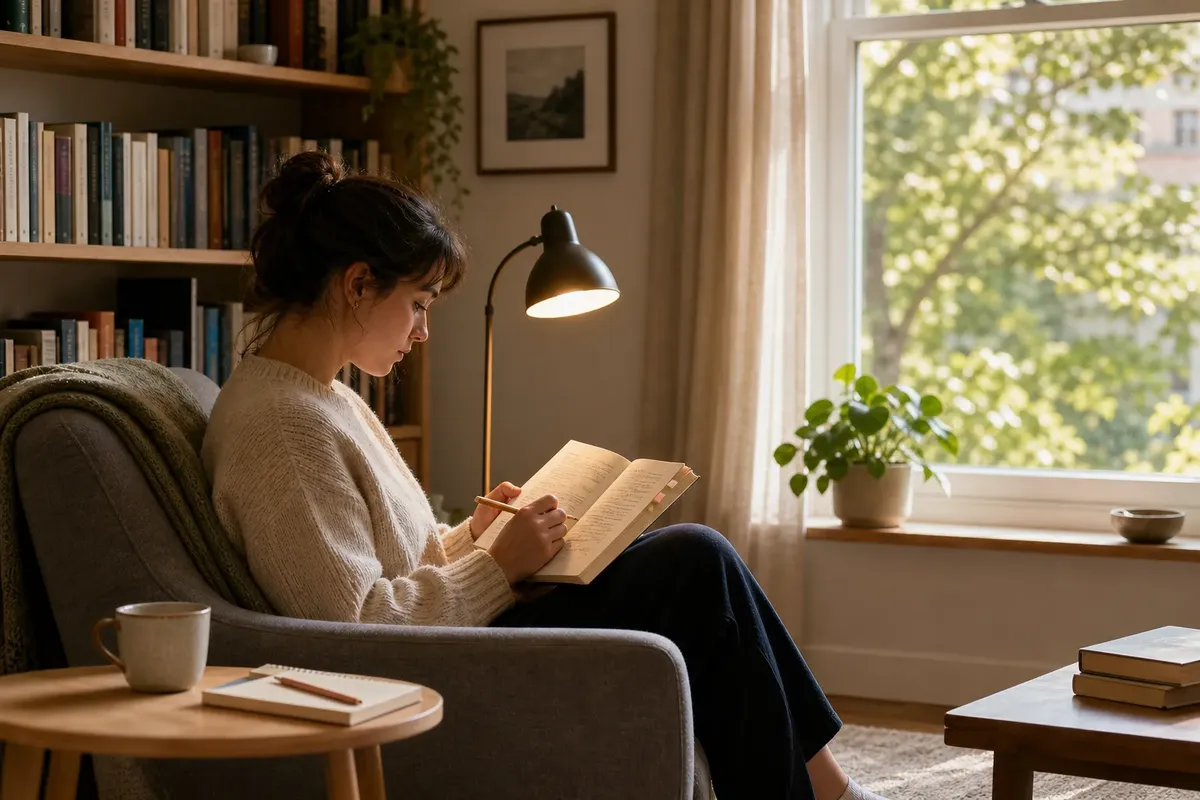
The common mistake in choosing a reading spot is to picture the perfect reader rather than the book in hand. A quiet corner or window seat can each seem appealing until the reading begins: one may feel closed in, the other may keep offering reasons to look up. The useful choice starts with what the session asks of you.
Read for the task
Close reading depends on keeping a line of thought in view. If you are annotating an argument or learning unfamiliar ideas, a wall or bookcase can give your eyes fewer reasons to wander. A familiar novel, a short essay or a poem may be easier to resume after a glance through the window.
This is not a ranking of books by seriousness. It is a difference in rhythm. Some reading asks you to hold a paragraph in mind; other reading can make room for pauses without losing its shape.
Before you choose, name the work in plain terms: follow an argument, mark passages, read for pleasure, or rest with a few pages. Then ask which view and soundscape would support that particular intention.
Quiet corner or window seat?
Does a quiet corner help with close reading?
It can, especially if people moving through the room draw your eyes away. Facing a bookcase may limit visible activity, though it will not block conversation or appliances.
Is a window seat distracting?
That depends on what is outside and how much you want to attend to it. A slow-changing view may offer a natural pause; traffic or people passing close by may repeatedly pull you out of the text.
Which seat suits annotation?
Choose the place where the page is clear and a pencil or notebook is easy to reach. A firm chair and nearby surface may matter more than whether the seat faces a wall or a window.
Can I switch seats during a book?
Yes. A reading session can change character: close study may give way to a lighter chapter, or the room may become noisier. Changing seats is a response to the task, not a verdict on either place.
What each view offers
A corner can make a room feel visually quieter, but the name does not tell you whether it is peaceful. A chair near a doorway may be crossed often; a window seat in a back room may be undisturbed. Look at the actual arrangement rather than relying on the label.
A window brings changing light and outdoor movement into view. Branches shifting in wind can be restful, while a busy pavement can become an unintended performance. Neither is inherently better: the question is whether the view belongs in the kind of attention you want to give the book.
Light and sound also shape the choice. Glare can hide print or reflect from a screen; voices may compete with words even when nothing catches your eye. A chair angled away from the glass may keep the window nearby without making it the centre of your view.
Make the seat fit
Rather than turning the choice into a routine of testing every detail, use the needs of the reading to decide what to bring or change. A lamp, curtain or small table is useful when it solves a clear problem; extra furnishings can make a simple reading place feel like a project.
- Page clarity: Check whether glare or dimness makes print hard to see; if it does, turn the chair or adjust a curtain, and if the page remains unclear, choose another seat.
- Visual movement: Check whether passing people interrupt your place; if they do, face a wall or bookcase, and if that feels confining, try a less-used part of the room.
- Sound: Check whether voices or appliances compete with the text; if they do, move farther from the source, and if the sound still intrudes, consider another room or time.
- Writing needs: Check whether you need to annotate; if so, bring a pencil and place to rest the book, and if not, leave the surface clear.
- Reading rhythm: Check whether you can resume easily after looking up; if you lose the thread, choose a less active view, and if you return without effort, keep the window seat in consideration.
- Comfort: Check whether the chair lets you hold the book without strain; if it does not, change the chair or add a cushion, and if it does, avoid altering the arrangement without a reason.
Let the answer guide the seat, not an idealised picture of what a reading nook ought to look like.
How should the choice change?
What if the window is bright?
Turn the chair so light falls across the page rather than into your eyes, or draw a sheer curtain. If print or screen reflections remain troublesome, use a different seat for that session.
What if the corner is noisy?
A corner only reduces sound if it is farther from the source or separated from it. If conversation carries through the room, try another room or a quieter time rather than expecting the corner itself to solve it.
What if I want both a view and focus?
Angle the chair so the window sits to one side rather than directly ahead. This keeps the outdoor view available during pauses while giving the page the main place in your field of vision.
A worked reading choice
Imagine you have a pencil, a marked-up essay to read and a living room where people walk towards the kitchen. You sit by the window, but glare makes the print hard to follow and each person crossing the room breaks your concentration. You turn an armchair towards a bookcase, move a lamp until the page is clear, and put the pencil on a small table beside you. The result is a readable page with less movement in your direct view; if voices still interrupt, the remaining trade-off is sound, so another room or time may suit better. For a later session with an easy-to-resume novel, the window may make more sense.
Choosing a quiet corner or window seat is less about finding the best-looking place than matching the seat to the reading in front of you. For close work, favour the arrangement that helps you hold the thread; for lighter reading, allow a view that makes pauses feel welcome.
Another angle
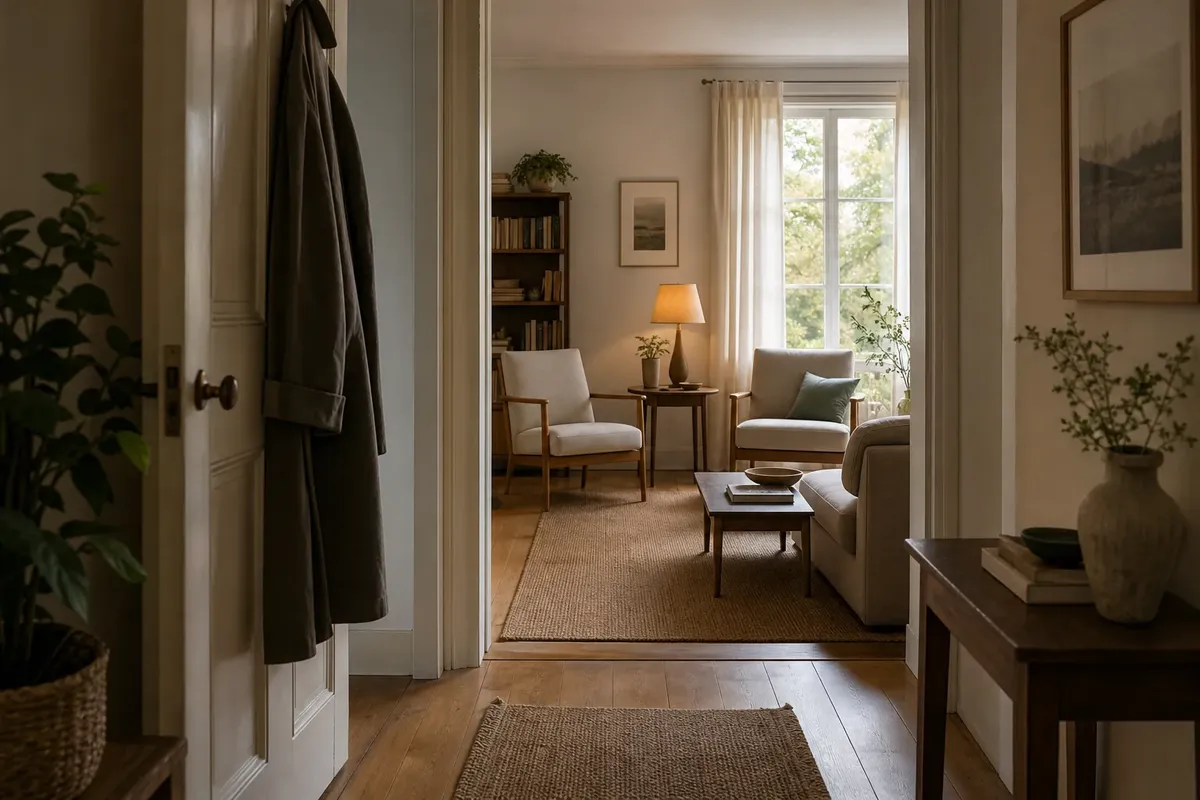
The Doorway View: Why a Room Changes from the Threshold
A doorway view can make a familiar room seem newly arranged; notice how light, memory and…
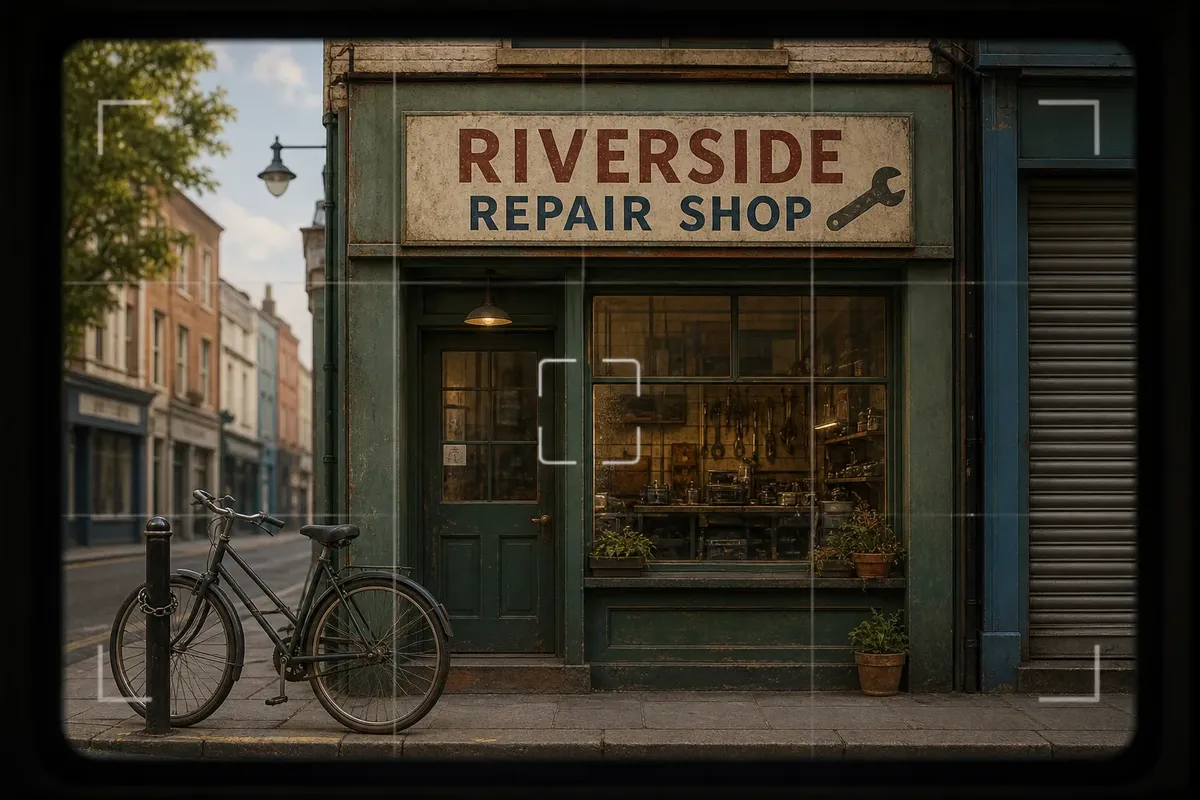
Before the Camera: The Viewfinder and the Habit of Framing
Use a camera viewfinder to decide what belongs in the frame, keeping the subject clear while…